
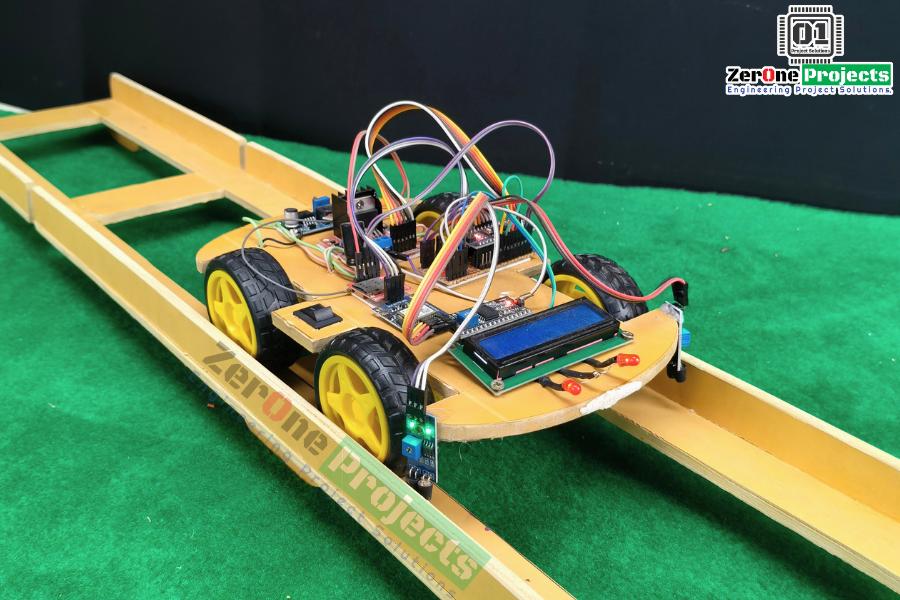
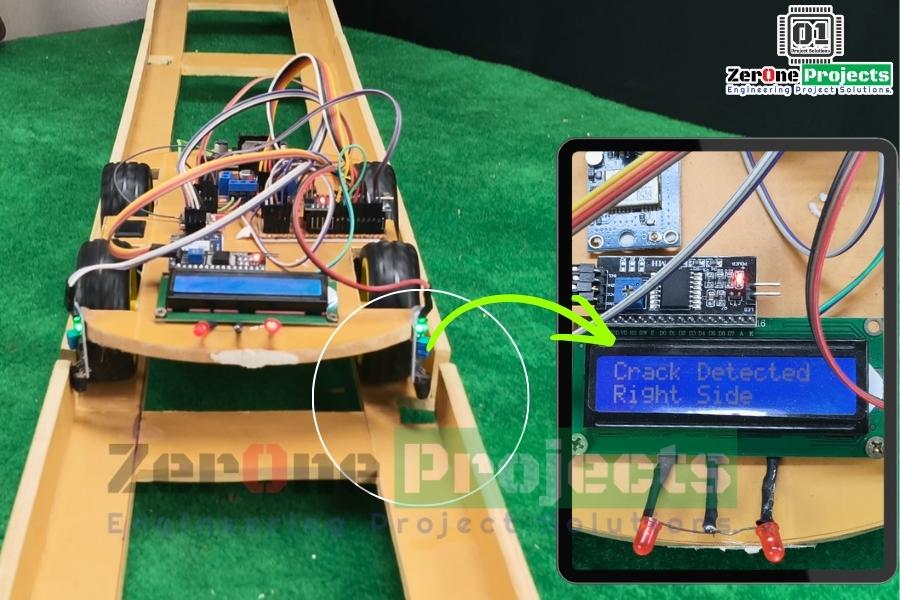
Railway Track Crack Detection
Project Fee:Negotiable
Project Discount:0
Project Duration:One Month
Railway Track Crack Detection.
The Railway Track Crack Detection System is designed to identify cracks or damage in railway tracks to improve railway safety. The system uses sensors and a NodeMCU controller to detect track abnormalities and provide alerts, helping reduce the risk of accidents and supporting timely maintenance.
Detect cracks and abnormalities in railway tracks.
Improve railway safety and reliability.
Provide alerts when potential damage is detected.
Reduce manual track inspection efforts.
Support timely maintenance and accident prevention.
Install a crack detection sensor on a railway track model.
Connect the sensor to the NodeMCU controller.
Process sensor readings to identify possible cracks.
Send detection information through an IoT monitoring system.
Generate an alert when a crack is detected.
Test the system using a model track with simulated cracks.
NodeMCU ESP8266
IR Sensor or Track Crack Detection Sensor
GPS Module
GSM Module
Buzzer
LCD Display
Battery
Railway Track Model
The sensor continuously monitors the railway track surface.
When a crack or abnormal gap is detected, the sensor sends a signal to the NodeMCU.
The controller processes the signal and determines the detection status.
The buzzer provides a local warning, while the GSM module sends an alert.
The IoT system displays the detection status for remote monitoring.
Early crack detection
Improved railway safety
Faster maintenance response
Reduced manual inspection
Remote monitoring capability
Potential accident prevention
The Railway Track Crack Detection System demonstrates how sensor technology and IoT can support railway track monitoring. By detecting potential damage and providing timely alerts, the system can help maintenance teams identify problem areas and improve railway safety. Further testing on real railway tracks would be necessary before practical deployment
👉 দেশের যে কোন ইঞ্জিনিয়ারিং ভার্সিটির প্রজেক্ট, প্রেজেন্টেশন, থিসিস পেপার, প্রজেক্ট বই, ইত্যাদি। সকল সমাধান পাবেন আমাদের কাছে।
🔰 ইঞ্জিনিয়ারিং ফাইনাল ইয়ার প্রজেক্টস এবং স্কুল-কলেজের ছাত্র ছাত্রীদের বিজ্ঞান মেলায় প্রতিযোগিতা করার জন্য, পছন্দের তালিকায় রাখতে পারেন আমাদের নিজিস্ব ডিজাইনের তৈরি এই ডেমো প্রজেক্ট গুলো। আমাদের রয়েছে সফলতার সাথে ১৫০০+ প্রজেক্ট সম্পন্ন করার অভিজ্ঞতা।
🔰 আপনার প্রজেক্টের আইডিয়া, সম্পূর্ণ প্রজেক্ট, প্রজেক্ট পেপার, পাওয়ার পয়েন্ট প্রেজেন্টেশন এবং আপনার প্রজেক্ট ভাইবা পর্যন্ত সকল ধরণের কারেকশন, সহযোগিতা করার জন্য আমাদের টিম আছে আপনার সাথে।
🔰 প্রতিনিয়ত আমরা আপনাদের জন্য বেস্ট সার্ভিস আর আপনাদের চাহিদা অনুযায়ী প্রজেক্ট তৈরি করে আপনাদের হাতে পৌঁছে দেওয়ার জন্য করে যাচ্ছি অক্লান্ত পরিশ্রম। আপনাদের রেসপন্সে আমরা অভিভূত।
𝐂𝐨𝐧𝐭𝐚𝐜𝐭 𝐃𝐞𝐭𝐚𝐢𝐥𝐬:
📞 01894-801150, 01886-180101
📧Email: projects.zeronebd@gmail.com
🌐Web: https://www.projects.zeronebd.com
YouTube Channel: https://www.youtube.com/c/ZerOneProjects
🏠অফিস:
প্লট-০৩, রোড -০৪, সেকশন ৬/ক
মিরপুর-২ (মিরপুর শের-ই-বাংলা স্টেডিয়ামের ৪নং গেটের বিপরীতে),
ঢাকা-১২১৬
Copyright ©2023 ZerOne IT Limited. All Rights Reserved.