
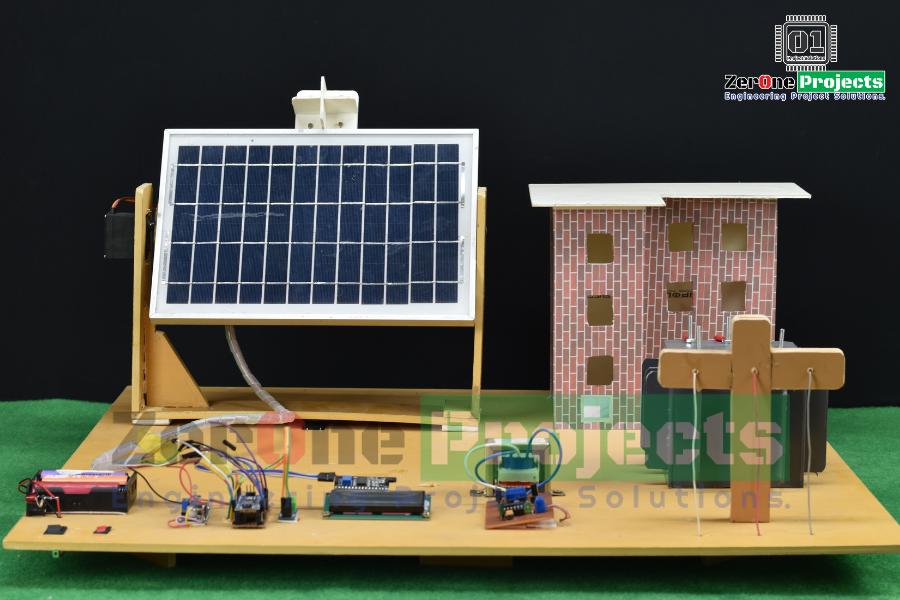
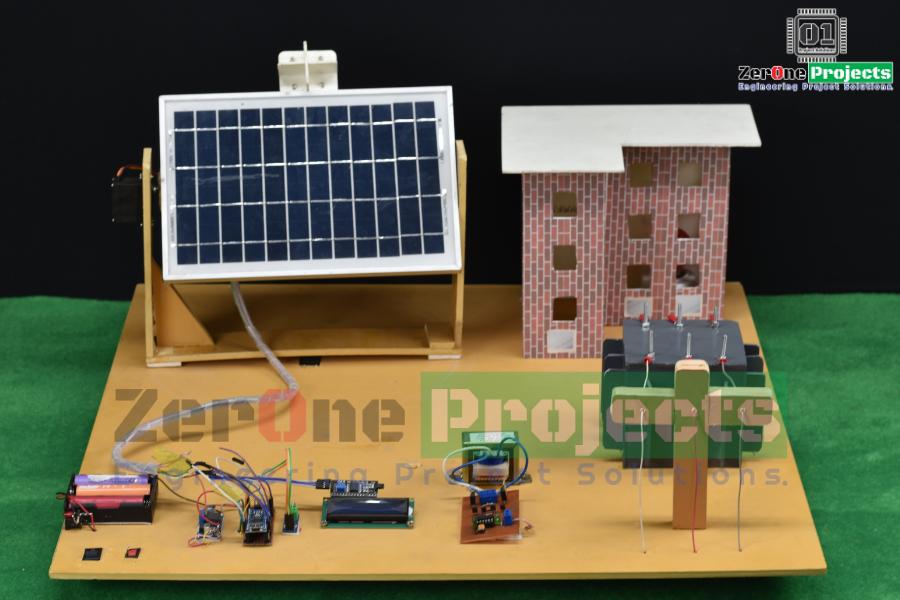
Dual Axis Sun Position Powered On Grid Solar System
Project Fee:Negotiable
Project Discount:0
Project Duration:7 Days
Dual Axis Sun Position Powered On Grid Solar System.
The Dual-Axis Sun Position Powered On-Grid Solar System is designed to improve solar energy generation by automatically adjusting the solar panel's position according to the sun's direction. The system tracks sunlight along both horizontal and vertical axes to capture more solar radiation throughout the day. By connecting the solar setup to the electrical grid through a grid-tied inverter, it supports efficient renewable energy generation and reduces dependence on conventional electricity.
Track the sun along two axes.
Improve solar panel energy collection.
Maximize sunlight exposure throughout the day.
Integrate solar power with the electrical grid.
Monitor voltage, current, and power generation.
Improve renewable energy utilization.
Install a solar panel on a dual-axis mounting structure.
Use light sensors to detect the sun's direction.
Connect the sensors to an ESP32 controller.
Operate two motors to adjust horizontal and vertical panel positions.
Connect the solar panel to a grid-tied inverter.
Monitor solar energy generation and system performance.
Solar Panel
ESP32 Development Board
LDR Sensors
Servo Motors (2)
Motor Driver
Grid-Tied Inverter
Voltage Sensor
Current Sensor
LCD Display
Mounting Structure
Limit Switches
LDR sensors detect differences in sunlight intensity from different directions.
The ESP32 processes sensor readings and determines the required panel adjustment.
Two motors move the panel horizontally and vertically toward the direction of stronger sunlight.
The solar panel converts sunlight into DC electrical energy.
The grid-tied inverter converts DC power into grid-compatible AC electricity.
Voltage and current sensors monitor the generated power for performance analysis.
Improved sunlight tracking
Increased energy collection potential
Automatic dual-axis adjustment
Real-time power monitoring
Renewable grid-connected generation
Reduced dependence on conventional energy
The Dual-Axis Sun Position Powered On-Grid Solar System combines automatic solar tracking with grid-connected power generation. By adjusting the panel's orientation throughout the day, it aims to improve sunlight utilization and energy output compared with a fixed panel. Actual performance depends on weather, tracking accuracy, motor consumption, and system design. A certified grid-tied inverter and appropriate electrical protection are essential for safe grid integration.
🔰 ইঞ্জিনিয়ারিং ফাইনাল ইয়ার প্রজেক্টস এবং স্কুল-কলেজের ছাত্র ছাত্রীদের বিজ্ঞান মেলায় প্রতিযোগিতা করার জন্য, পছন্দের তালিকায় রাখতে পারেন আমাদের নিজিস্ব ডিজাইনের তৈরি এই ডেমো প্রজেক্ট গুলো। আমাদের রয়েছে সফলতার সাথে ১০০০+ প্রজেক্ট সম্পন্ন করার অভিজ্ঞতা।
🔰 আপনার প্রজেক্টের আইডিয়া, সম্পূর্ণ প্রজেক্ট, প্রজেক্ট পেপার, পাওয়ার পয়েন্ট প্রেজেন্টেশন এবং আপনার প্রজেক্ট ভাইবা পর্যন্ত সকল ধরণের কারেকশন, সহযোগিতা করার জন্য আমাদের টিম আছে আপনার সাথে।
🔰 প্রতিনিয়ত আমরা আপনাদের জন্য বেস্ট সার্ভিস আর আপনাদের চাহিদা অনুযায়ী প্রজেক্ট তৈরি করে আপনাদের হাতে পৌঁছে দেওয়ার জন্য করে যাচ্ছি অক্লান্ত পরিশ্রম। আপনাদের রেসপন্সে আমরা অভিভূত।
𝐂𝐨𝐧𝐭𝐚𝐜𝐭 𝐃𝐞𝐭𝐚𝐢𝐥𝐬:
📞 01894-801150, 01886-180101
📧Email: projects.zeronebd@gmail.com
🌐Web: https://www.projects.zeronebd.com
YouTube Channel: https://www.youtube.com/c/ZerOneProjects
Instagram: www.instagram.com/zerone_projects_bd
🏠অফিস:
প্লট-০৩, রোড -০৪, সেকশন ৬/ক
মিরপুর-২ (মিরপুর শের-ই-বাংলা স্টেডিয়ামের ৪নং গেটের বিপরীতে),
ঢাকা-১২১৬

Copyright ©2023 ZerOne IT Limited. All Rights Reserved.