
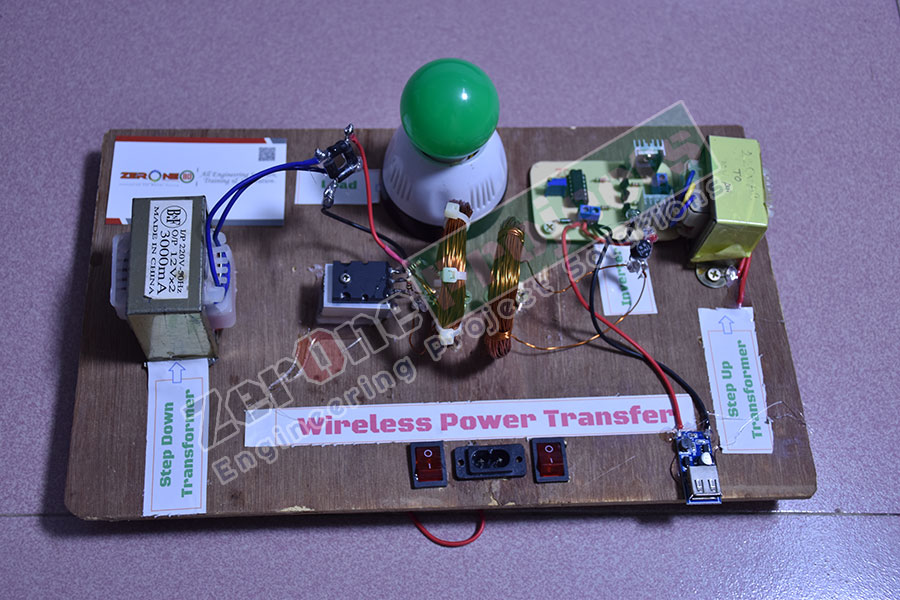
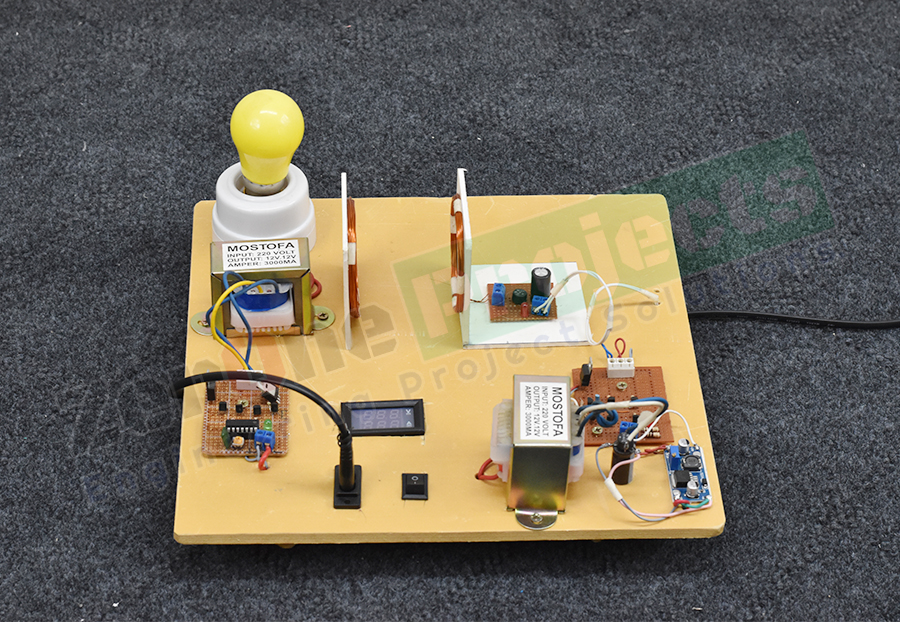
Powerful Wireless Power Transfer System.
Project Fee:Negotiable
Project Discount:0
Project Duration:7 Days
Powerful Wireless Power Transfer System.
Introduction:
Wireless power transfer (WPT), in its general term, has been around us for decades in applications such as telemetry, satellite communications, and radio frequency identification (RFID) tags. Most of these applications transfer low amounts of power, in the range of microwatts to milliwatts, for data transfer. For higher-power applications, from few watts to several kilowatts, over moderate distances, the WPT has recently been the focus of the industrial developments. The most common method of high power WPT is through inductive coupling that was invented by Nikola Tesla more than a century ago. The recent developments in semiconductor industry for high frequency and high-power applications have paved the path for high-power inductive WPT improvements. Inductive WPT offers several benefits over the wired connection and is applied in numerous applications such as wearable electronics, health care, and automotive industry. Wireless power transfer (WPT) is one of the hottest topics being actively studied, and it is being widely commercialized. In particular, there has been a rapid expansion of WPT in mobile phone chargers, stationary charging electric vehicles (EVs), and dynamic charging EVs, also called road-powered EVs (RPEVs). It is expected that WPT industry will grow persistently in the coming decades.In this project, the concepts and practical applications of WPT to EVs are introduced. Inductive power transfer (IPT) for stationary and dynamic charging EVs is explained in detail. Design examples with experimental verifications are provided to help beginners of IPT to develop their own IPT products for EVs.
Block Diagram:

Circuit Diagram:

Required Instrument:
ü Diode/ Bridge Rectifier IC
ü Transistor BC547
ü Transistor TTC5200
ü Coil
ü CD 4047IC
ü IRFZ44 MOSFET
ü Transformer
ü USB Female Connector
ü Capacitor 22uf
ü Resistor 1K,220Ohm,407k

Copyright ©2023 ZerOne IT Limited. All Rights Reserved.